

Image
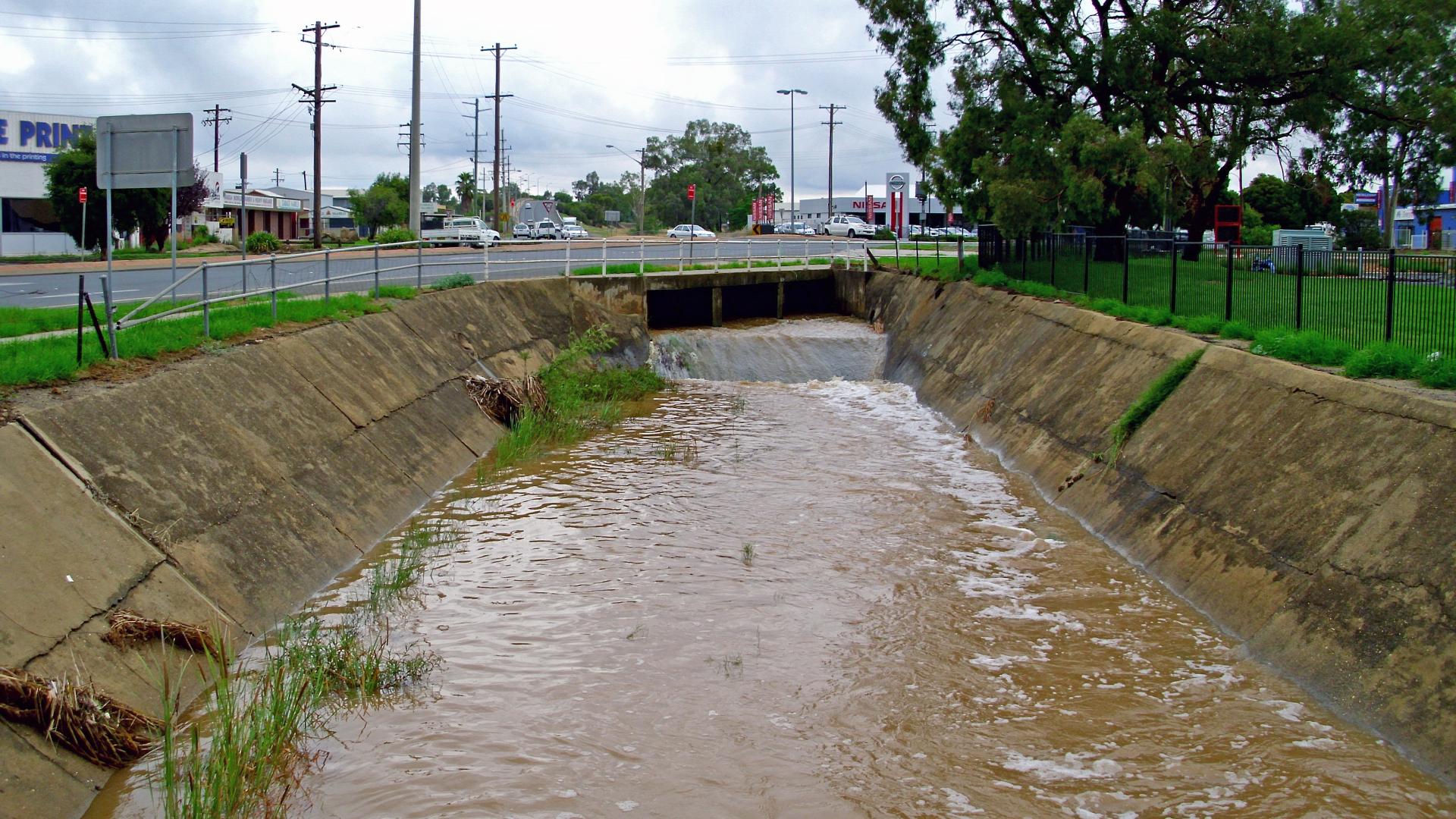
Stormwater culvert along Dobney by Bidgee. Used via Creative Commons Attribution ShareAlike 3.0, via Wikimedia.
Asset
Water Infrastructure – Stormwater
Flood control structures, ditches, street gutters, sewer systems

Relevant Options
Develop and implement a jurisdiction-wide green infrastructure plan that supports vegetation-based stormwater management best practices and strategies for managing urban heat.
Use green infrastructure in public spaces and streets to reduce stormwater runoff in historically underserved neighborhoods.
Form a stormwater utility that can create fee-based services to help pay for flood risk reduction projects.
Identify the locations of water distribution, water treatment and stormwater infrastructure. Monitor their conditions (i.e., age, material integrity). Note that subsidence can negatively affect water
Identify lift stations and force mains that may be impacting raw water supply (e.g., force mains that transport sewage across lakes).
Address flood-prone roads by installing green stormwater practices.
Identify opportunities for installing check valves. Check valves can help prevent sea water from backing up into drainage infrastructure. This strategy can help prevent tidal inundation. Prioritize check
Integrate projected increases in wildfire frequency and intensity into watershed management and planning, dam and raw water reservoir operations and dam emergency planning.
Encourage and promote the use of vegetative buffers around streams, channels and water sources to absorb and manage runoff.
Build partnerships with local nonprofits to increase opportunities for implementing green infrastructure. Green infrastructure helps manage stormwater on site, can improve water quality, can help protect
Continue to incorporate Green Stormwater Infrastructure (GSI) into development regulations
Explore possible locations for the creation of bioswales to absorb storm runoff.
Study water system to identify manmade obstructions in water flow. Intersections, such as railway crossings and roadways, can create choke points in drainage
Proactive maintanence of stormwater infrastructure.
Undertake a comprehensive evaluation of stormwater improvements necessary to expand surface water storage, enhance water quality treatment and reduce stormwater discharges.
Provide outreach, education and technical assistance for best practices in stormwater management and green infrastructure.
Update departmental policies to better incorporate consideration of climate impacts into decision making.
Increase the number of peak flow diversions into offline storage in water supply systems.
Complete Dutch Dialogues to integrate landscape design with water management.
Design program policies to promote stream and wetland restoration. Ensure adequate retention, drainage and diversion of stormwater. Such policies could also encourage green infrastructure such as grassy
Related Case Studies & Action Plans
Image
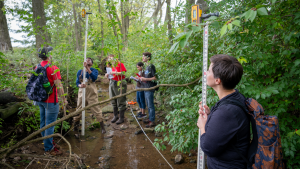
Nancy Pau/USFWS