Case Study

Recertifying Utility Workers in a Small, Remote Community

The American Samoa Power Authority (ASPA), a Samoan government-owned water, wastewater, and power utility, faces many challenges in bolstering its workforce, including population decline, limited access to technical resources, aging and poorly mapped utility systems, limited financial resources, limited opportunities for worker advancement, and exposure to disruptive climate-related hazards. 

To help overcome these challenges, the ASPA is leveraging a federal requirement to periodically recertify water utility operators in order to address unemployment challenges that are common to many small, remote, low-income communities.

Image
NOAA Research logo
Location American Samoa
Year
2024
Cost $1.8 million

Image
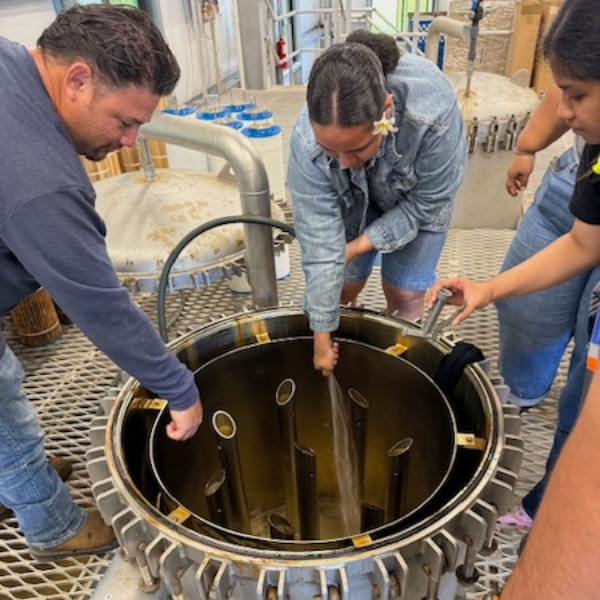
Three people reaching down into a large cylindrical industrial filtration unit with multiple vertical tubes inside.
  • Gary Byrd, TCB Services, LLC

  • Trainees gain hands-on experience in infrastructure maintenance, practicing the cleaning and inspection of a large filtration unit as part of the American Samoa Climate Ready Workforce program.

    Due to normal attrition, the COVID-19 pandemic, and the migration of young people away from the Territory, the ASPA is experiencing a 25% shortfall in staffing. With 110 job vacancies in its 439-person workforce, the organization is under substantial pressure to meet day-to-day operational challenges. Workforce development and other planning efforts do not receive top-priority attention under such conditions.

    To combat these negative trends, the ASPA joined the University of Hawaiʻi Sea Grant Program to successfully compete for NOAA Climate Ready Workforce funds. They aim to train and certify new workers for a variety of water, wastewater, and electric power jobs. To support existing staff and needs, they will recertify current Level I - IV Operators of Water Distribution and Treatment Systems at or above EPA standards.

    An off-island trainer is providing Water System Operator training at ASPA facilities. Training for other utility jobs, such as electricians and welders, will be conducted by ASPA or in collaboration with the American Samoa Community College Trade and Technical Department.

    Given the significance of the environmental hazards facing the Territory, ASPA and the trainer are mapping climate-related risks and sea level rise information into all of these programs. Trainers are working to instill an understanding of climate resilience across ASPA’s managerial, technical, and safety departments.

    Utility services face substantial risks. American Samoa is extremely vulnerable to sea level rise due to the combined effects of climate change and accelerated subsidence associated with an earthquake that struck Japan in 2011. Since 2009, the sea level in American Samoa has risen nine inches, with two of those inches coming from sea level rise and seven from subsidence. While the loss of coastal land is already apparent, related risks to water supplies, wastewater and electric power systems, roads, and private property (concentrated along the narrow coastal plain), are less visible. One insidious problem is saltwater infiltration into the freshwater aquifer, which has already led to the decommissioning of some freshwater wells. Maintaining reliable infrastructure under these conditions is especially challenging in American Samoa because materials, tools, and spare parts can take many months to reach the islands.

    ASPA recognizes the urgency of expanding its entry-level workforce; recertifying utility workers; and increasing resilience-oriented knowledge in GIS technology, desalination systems, planning and procurement procedures, and other areas to improve its infrastructure and increase the community’s resilience. 

    Image
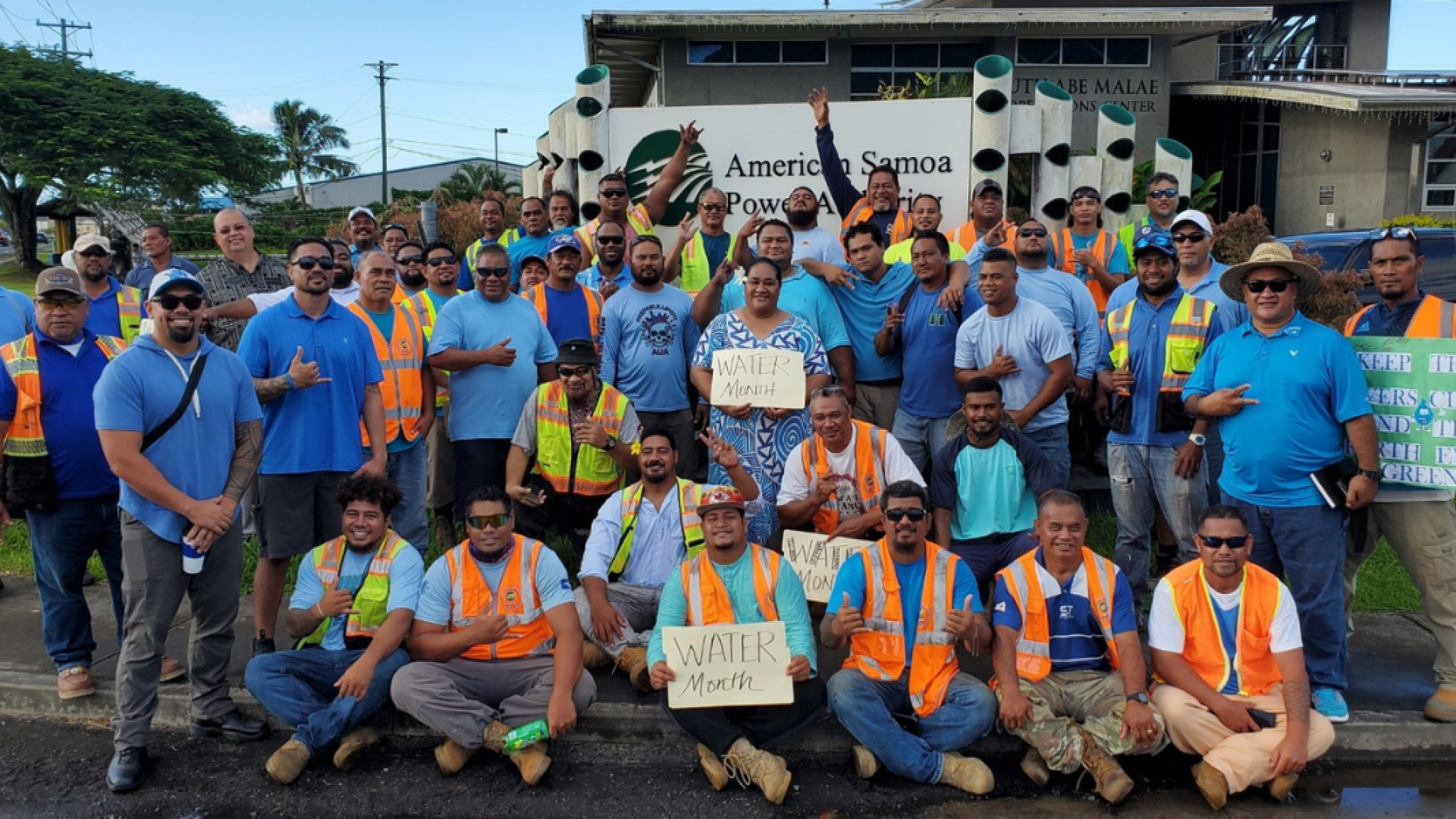
    A group photo of about 30 people smiling at the camera; some of them are cheerfully holding up signs that read "Water Month"

    American Samoa Power Authority (ASPA) Water Division celebrating Water Month.

    Cultural and economic factors, meanwhile, present significant recruitment challenges. American Samoa has a poverty rate of 50.7%, which is nearly 2.5 times that of the highest in U.S. states (Louisiana, Mississippi, and New Mexico), yet many jobs remain unfilled because of strong traditions. American Samoa enjoys a system of traditional land tenure, in which most of the land is owned intergenerationally by families, and communal lands are governed by the heads of the families (matai). While most people live along the coast, most families also have upland farms that, along with fishing, provide subsistence livelihoods. Additionally, caring for family members and family land are top cultural priorities. As young people leave the Territory to seek educational and employment opportunities elsewhere, family and land care responsibilities fall to those who remain. Along with federal assistance programs and a comprehensive healthcare system in the Territory, these cultural and family traditions reduce the perceived value of seeking career-oriented jobs.

    The homes, businesses, roads, and utility infrastructure concentrated along the coast are exposed to amplified climate-related hazards associated with tides and storm surges, yet relocating infrastructure requires consent from the families that own the land. Given the risks and the importance of caring for families and the land, workforce training programs target job satisfaction by demonstrating how utility jobs protect the health and welfare of the community.

    An initial training cycle in 2025 assessed knowledge among ASPA’s Water and Treatment System Operators.

    Title
    Funding & Building Capacity
    Text

    ASPA received a $1.8 million Climate Ready Workforce grant from NOAA to develop a curriculum, bring a water system trainer to the islands, and provide childcare and other support services for student trainees.