
Image
  • Vee Terzy

  • Case Study

    Matching Regional Hiring Trends to Climate Action Plans Creates Training & Career Opportunities

    Long Beach City College took the unusual step of creating a Resilience & Sustainability team within its Workforce and Economic Development Division to better align educational offerings with the water and power resilience needs of cities throughout Los Angeles County.

    Image
    NOAA Research logo
    Location Los Angeles County, CA
    Year
    2025
    Cost $9.5 million

    Community colleges’ Workforce and Economic Development Divisions (WEDD) connect educational offerings with employer needs. This involves building relationships with regional employers to determine how to prepare students for available and emerging career-oriented jobs. WEDD offices are often organized into teams that focus on different sectors of the regional economy.

    Implementing climate resilience has historically received less attention than developing plans to address climate-related risk. In 2024-25, the WEDD at Long Beach Community College (LBCC) established a new team to focus specifically on job opportunities in sustainability and climate resilience. This focus on climate resilience within an economic and workforce development organization creates tangible pathways for executing corporate, municipal, and regional climate action plans.

    Building curricula around climate action plans helps ensure that utility companies, municipal and regional governments, and local businesses can hire workers with the skills needed to meet those plans’ many goals and mandates.

    Image
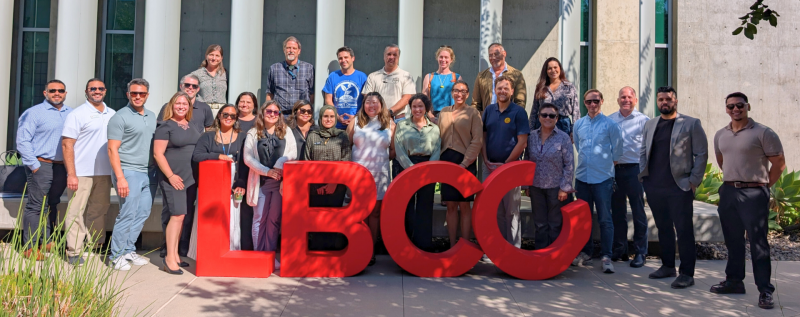
    A large group of people gathered around large red "LBCC" letters on a sunny day
  • Climate Resilience and Sustainability at Long Beach City College

  • Description

    The Los Angeles County Climate Ready Employment Council is a biannual advisory council of partnerships that guide Long Beach City College in the development of industry responsive curriculum, training, and job placement opportunities that help create a Climate Ready Workforce.

    The LBCC team’s work is aided by an unusual combination of municipal and regional climate action plans which are complemented by labor market assessments that are unique to the region. Forecasts by the Los Angeles Economic Development Corporation and the Center of Excellence are being evaluated relative to the City of Long Beach Climate Action Plan and County of Los Angeles Climate Action Plan to identify career pathways that address high priority climate resilience activities. The Rand Corporation is conducting a gap analysis to identify water and power infrastructure vulnerabilities as well as relevant employment opportunities throughout Southern California's populous Los Angeles and Orange Counties.

    Image
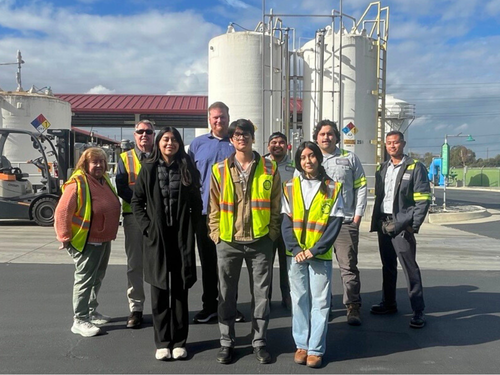
    A group photo in front of large industrial towers on a sunny day.
  • Steven Mendoza, Climate Resilience & Sustainability, Program Manager

  • Description

    Long Beach City College students are earning and learning. The Viking Climate Action Fellowship provides paid job training to empower the next generation of professionals in climate-critical industries.

    Armed with this information, as well as new and ongoing relationships with regional employers, LBCC is adapting its curricula in several departments: 

    • Electrical Technology (e.g., solar);
    • Construction Technology (e.g., energy efficiency);
    • Automotive Technology (e.g., electric vehicles and charging infrastructure);
    • and other skilled trades-oriented departments.

    The project team is leveraging relationships with local employers to create training and job placement pipelines for workers in the water and power industries. A Water Utility Academy, for example, is being developed by the college and Long Beach Utilities to train and certify workers in water and wastewater system operations.

    Job-related training will be conducted at LBCC facilities and those of the project’s employer partners that are located within or adjacent to neighborhoods that experience chronic underemployment. Outreach and wraparound services, such as bus passes and meals, are being directed to meet the needs of potential students and employees in these same neighborhoods.

    The City of Long Beach adopted a Climate Action Plan in 2022 based on climate-related hazards and resilience challenges facing the city. These hazards include coastal flooding, water quality (saltwater infiltration into the freshwater aquifer), drought and water insecurity, extreme heat, and poor air quality.

    The Climate Resilience & Sustainability team within LBCC’s Workforce and Economic Development Division targets employment opportunities related to these specific concerns. Likewise, the County of Los Angeles and other municipalities within the county have adopted climate action plans that address local and regional hazards and pathways to meet State of California greenhouse gas reduction mandates and other sustainability goals.

    The climate hazards facing the City of Long Beach are consistent with climate hazards experienced by cities throughout Los Angeles County. Long Beach is located in a coastal microclimate, however, which means that extreme heat, electricity demand for air conditioning, poor air quality, and wildfire risk are less severe than they are in the county’s inland communities. Nevertheless, the consistency of issues facing the nation’s most populous county ensures that students trained at LBCC will be able to access job opportunities throughout the region.

    The Resilience and Sustainability team is part of a larger workforce development enterprise at LBCC. The City of Long Beach is engaged in multiple economic development initiatives to replace legacy sectors, such as aircraft manufacturing, and to modernize its economic base, for example by attracting tech startups. 

    Both training and planning activities are ongoing. Some training programs, such as the Water Utility Academy program, began in 2025. The first cohort of 25 received training and are working full time on the Long Beach Utilities crews. The Academy provides industry-aligned training to enhance technical knowledge, operational safety, and regulatory compliance in water and wastewater infrastructure maintenance. 

    Title
    Funding & Building Capacity
    Text

    LBCC received a $9.5 million Climate-Ready Workforce development grant from NOAA. While this type of community college workforce development activity is typically supported by federal or state grants, LBCC envisions that large businesses, municipal governments, and utility companies will step in to provide substantial long-term financial support.