

Image
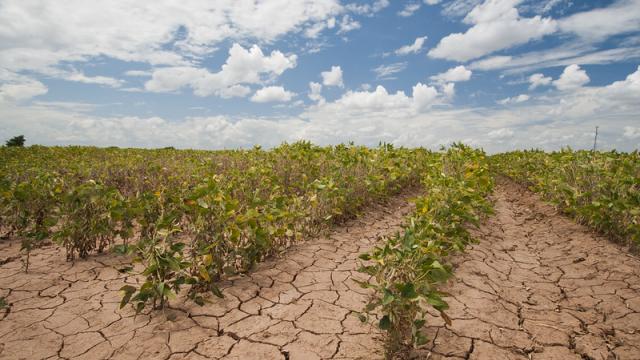
Soybeans show the affect of the Texas drought near Navasota, TX on Aug. 21, 2013. USDA photo by Bob Nichols.
Hazard
Drought
A drought is a deficiency of precipitation over an extended period of time resulting in a water shortage. Drought conditions range from dry weather patterns and low water supply to impacts on crops, ecosystems, and disruptions in supply and demand for various commodities. This website provides National Risk Index data based on agricultural losses for areas impacted by drought between 2000-2025. Explore options for addressing drought here.

Relevant Options
Engage the water management authority and other water officials in the development and update of regional water management models to account for future climate conditions.
Develop a study to look at drought and expected water supply in the future (50 years) given new data since the WEAP Modeling effort
Encourage farmers and foresters to research technological opportunities to use water resources more efficiently. Increasing water use efficiency can prevent or alleviate drought impacts.
Explore source water supply alternatives to be prepared in case of failure of the existing system.
Work with the water utility to keep and update data on source-specific water supplies. Establish and implement sector-appropriate outreach mechanisms when water levels get low.
Promote water conservation and water reuse in local businesses and industry. Increasing water use efficiency can prevent or alleviate drought impacts.
Identify and prioritize at-risk communities impacted by droughts.
Increase water efficiency and conservation.
Work with local water utilities, suppliers and regional partners to identify critical water needs and develop water supply plans that consider alternate sources, consider the use of regional water supplies,
Develop and communicate water-use best practices for agricultural producers in real time to inform plant and animal water needs, improve efficiency and reduce water loss.
Promote the reuse of stormwater by implementing capture and reuse technologies in county and municipal operations, where feasible.
Create a water efficiency task force to monitor water use and to identify and implement water saving measures.
Set up a regional water management and flood working group to facilitate climate considerations.
Across municipal operations, track water use and analyze trends at the building level. Reducing water use can prevent or alleviate drought impacts. Consider creating a dashboard to educate staff on water
Communicate strategies for water conservation to the public during Droughts.
Develop a drought communication and public information campaign. Use the campaign to facilitate timely communication of relevant information to building owners and managers, developers and the public.
Develop and update regional water models. Ensure water management models account for future climate conditions.
To prepare for droughts and other water impacts, enhance capacity and maintenance of water system interconnections — structures that join two existing water sources or supply systems to facilitate water
Engage the Water Management District and other water officials in the development or update of regional water management models to account for future climate conditions. Guide planning and investments
Encourage building owners, developers and homeowners to install WaterSense appliances, showerheads and toilets to conserve water. Increasing water use
Related Case Studies & Action Plans
Image
Angela Burgess, USFWS
Image
Photo attributed to Lazy Lightning. Incorporated here under the Creative Commons Attribution 2.0 Generic license. No endorsement by licensor implied.