

Image
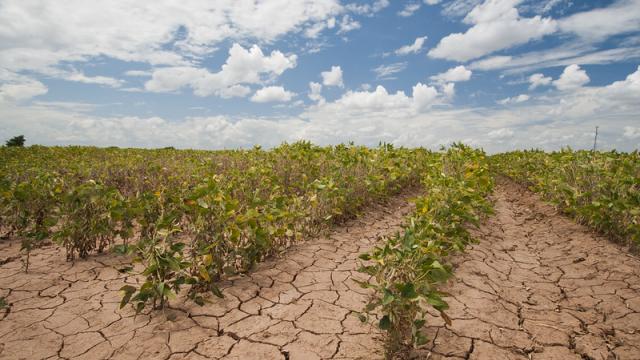
Soybeans show the affect of the Texas drought near Navasota, TX on Aug. 21, 2013. USDA photo by Bob Nichols.
Hazard
Drought
A drought is a deficiency of precipitation over an extended period of time resulting in a water shortage. Drought conditions range from dry weather patterns and low water supply to impacts on crops, ecosystems, and disruptions in supply and demand for various commodities. This website provides National Risk Index data based on agricultural losses for areas impacted by drought between 2000-2025. Explore options for addressing drought here.

Relevant Options
Consider agricultural needs when updating current water management infrastructure to maintain high-quality agricultural water supply at a reasonable cost
Encourage farmers to work with agriculture experts to identify and test more drought- and pest-resistant crop options for local food production.
Determine the cost sharing structure for capital investment, water rates, ownership, and operation and maintenance, etc.
Diversify food supply chains to prepare for potential impacts from changing seasons and extreme events. For example, support local food production by promoting new technologies, encouraging farmers to
Update building codes to remove barriers to composting toilets and tank-to-toilet systems.
Identify community partnerships that could provide drinking water in emergencies.
Identify individuals and households vulnerable to the effects of drought. Consider low- and moderate-income populations, older adults, individuals with mobility issues, households with limited English
Utilize regional water supply planning for long-term demands.
Require and incentivize pervious materials in new construction/maintenance to ensure aquifers are restored during rain events, as opposed to generating runoff due to hard stormwater infrastructure.
Grow partnerships between the public, private and nonprofit sectors to provide critical services to vulnerable populations in times of crisis.
Work with the water utility to monitor water loss in water supply systems through leak detection programs and sensors. Make improvements based on monitoring data. For example, improvements might minimize
Create emergency communication plans and tools to quickly and effectively save water during a shortage.
Encourage commercial and industrial cooling tower system upgrades that decrease water use. Increasing water use efficiency can prevent or alleviate drought impacts. Cooling towers can be high volume water
Assess and prioritize natural public areas for additional water storage capacity. This action could also support natural habitat resilience.
Create technology for real-time feedback about water supply to customers.
Collaborate to sustainably manage the regional water supply.
Urge federal, state, regional and local partners to prioritize climate change considerations in the planning, construction and operation of the regional water management and flood control system.
Determine the economic impact of water management on critical elements of the economy, including agriculture, tourism and marine industries.
Implement shoreline protection strategies, natural or otherwise, to protect public infrastructure and manage erosion.
Develop a program to remove invasive plants to avoid competition during extreme drought or wet periods.
Related Case Studies & Action Plans
Image
Angela Burgess, USFWS
Image
Photo attributed to Lazy Lightning. Incorporated here under the Creative Commons Attribution 2.0 Generic license. No endorsement by licensor implied.